Poseidon, storms and Cape Sounion: the myth behind Greece’s most beautiful temple

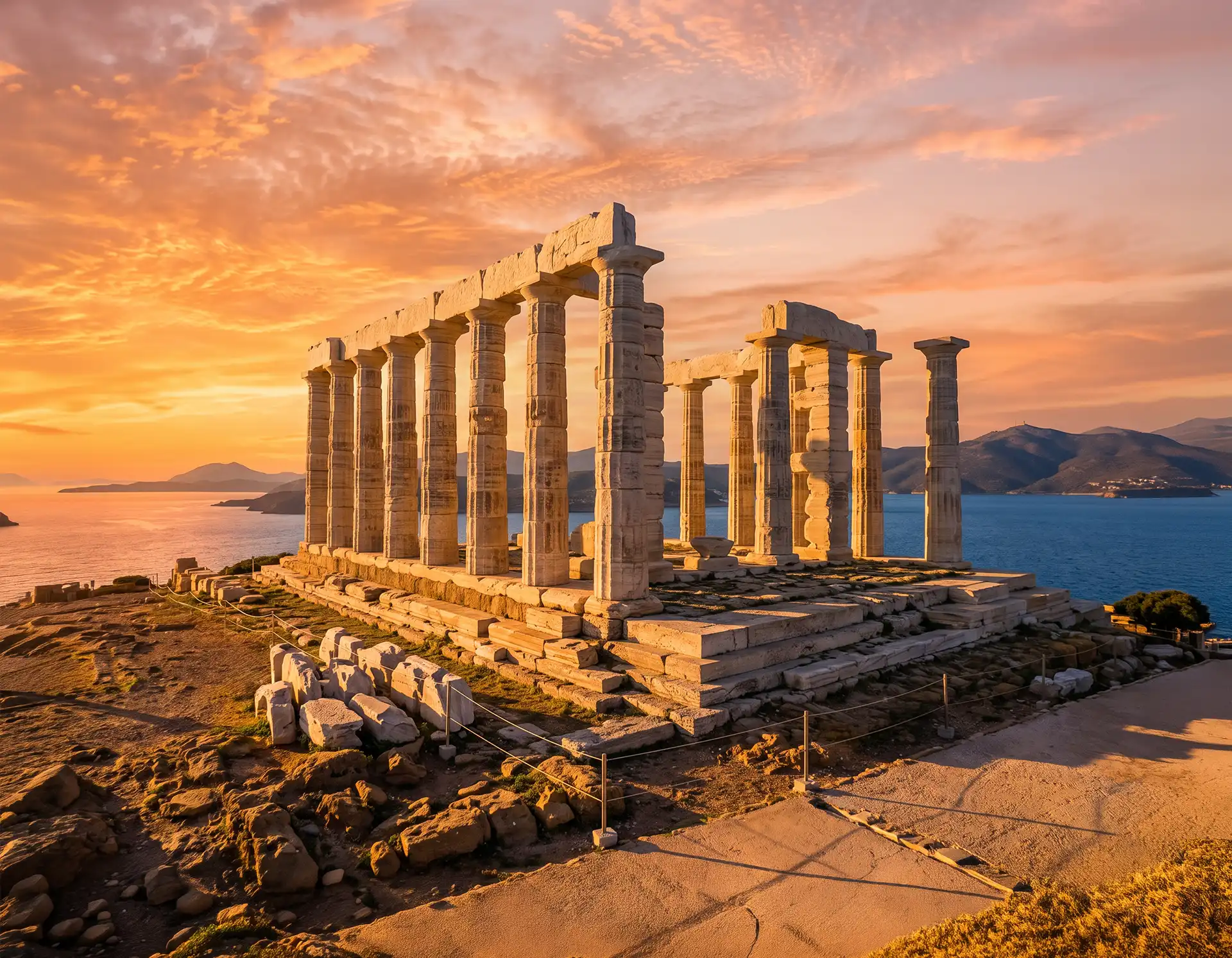
Temple of Poseidon Sounion at sunset over the Aegean Sea

The Temple of Poseidon at Sounion holds one of Greece’s most beautiful and saddest legends: the story of a father, a son, and the sea that ended up bearing his name.

It is located at Cape Sounion, and for almost 2,500 years it has watched the sun set over the Aegean exactly as you see it today.

It is no coincidence that it is one of the most photographed sunsets in Greece. It is, quite literally, the place the ancient Greeks chose to watch over the sea. And the myth surrounding it is one that stays with you.

The god who shook the earth and the sea

Poseidon was not only the god of the sea. The Greeks also called him “the earth-shaker”, because they believed he was responsible for earthquakes, and “the tamer of horses”, because it was believed he created the first horse by striking a rock with his trident. He was unpredictable, proud and easily offended —sailors prayed to him before setting sail not out of devotion, but out of fear.

Choosing the most exposed and windswept point of Attica to build his temple was not a coincidence: Sounion is the last piece of land ships see when leaving the Saronic Gulf towards the open Aegean. Praying to Poseidon right there, on the border between solid ground and his domain, made perfect sense for anyone about to risk their life at sea.

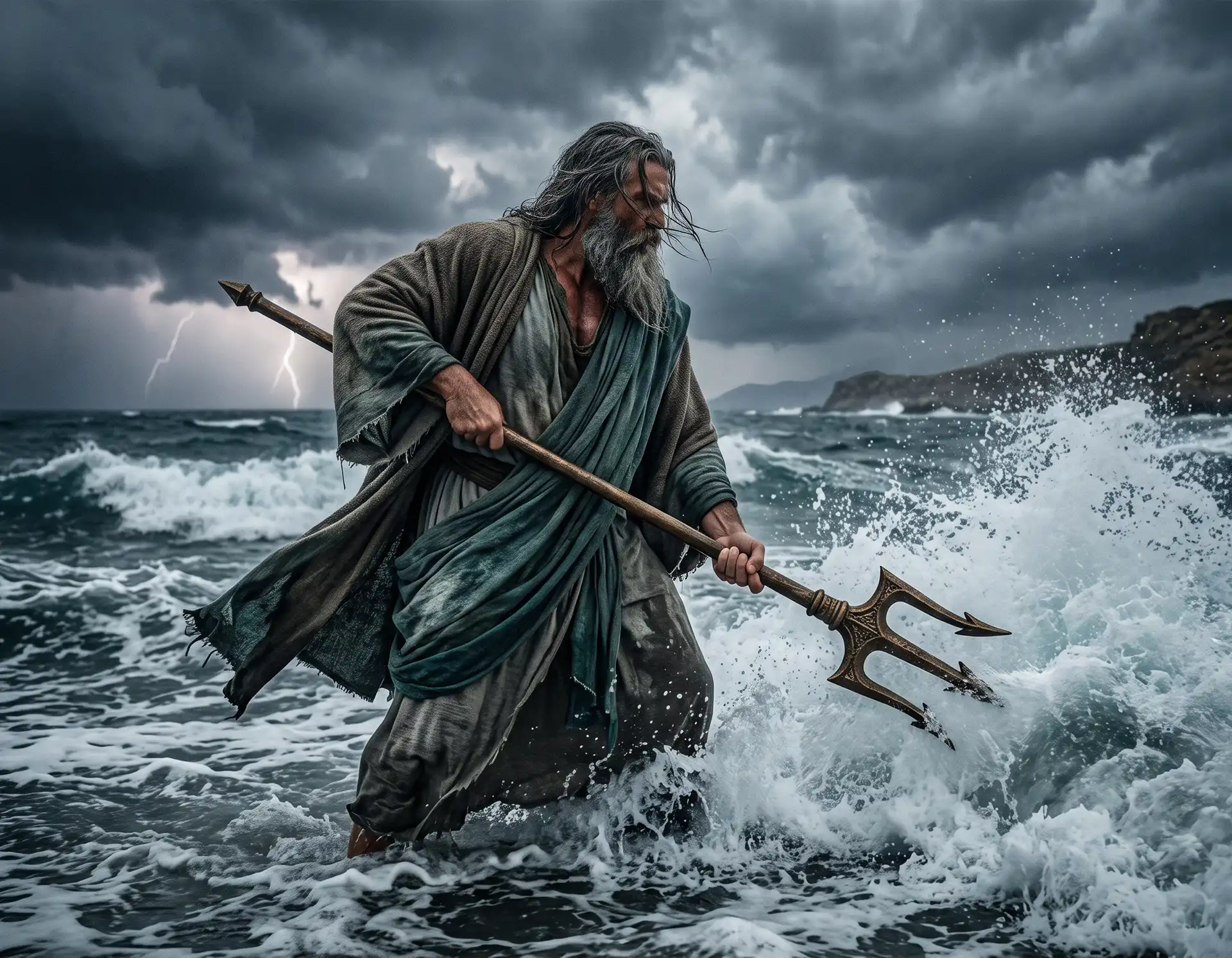
Representation of Poseidon next to the raging Aegean Sea

The legend that gave the Aegean Sea its name

But the most human story of Sounion is not about a god: it is about a father. Legend tells that King Aegeus waited here, on this very cliff, for the return of his son Theseus, who had sailed to Crete to face the Minotaur. They had agreed on a signal: if Theseus returned alive, the ship would raise white sails; if he had died, black sails.

Theseus defeated the Minotaur. But in the excitement of his return, he forgot to change the sails. Aegeus, seeing from the cliff that the ship was arriving with black sails, assumed the worst and threw himself into the sea. Since then, that sea has been called the Aegean Sea.

It is one of those Greek legends that does not speak of monsters or thunderbolts, but of something much more recognisable: the anguish of a father waiting for news, and the devastating weight of a small mistake.

The Temple of Poseidon at Sounion, the Parthenon’s brother

The temple you see today at Sounion, with its white marble Doric columns standing against the sky, was built in the 5th century BC, during the same golden age of Pericles that gave rise to the Parthenon. According to the Greek Ministry of Culture, it is no coincidence that they share that same family resemblance: it is believed that architects from the same Athenian school were involved in both.

Of the 34 original columns, only 16 remain standing, but they are enough to understand why generations of travellers —including Lord Byron, who carved his name into one of the columns in the 19th century— have made the journey here simply to see this particular sunset.

What you need to know before you go

Why is it called the Aegean Sea?

According to legend, it was named in honour of King Aegeus, who threw himself into these waters from Cape Sounion after believing his son Theseus had died.

How long does it take to get from Athens to Cape Sounion?

Around 1 hour and 15 minutes by road, following the coastline of the Athenian Riviera.

What is the best time to visit the Temple of Poseidon at Sounion?

Sunset, without a doubt: it is the moment when the light falls directly on the temple’s columns and the Aegean Sea stretches out in the background.

¿Se puede combinar con otras paradas?

Yes, the route passes along coastal towns such as Vouliagmeni, which are ideal for a short stop before or after the visit. You can find more information about the site on the official Visit Greece website.

Our honest recommendation

If the Acropolis shows you the greatness of Athens, the Temple of Poseidon at Sounion shows you something different: fragility. Here, there are no crowds or noise, only a temple, the wind, and the sea stretching out to the horizon. It is the kind of place where silence says as much as any guide.

Check out Plan Your Trip to experience sunsets like this with us.

Come and see the same sunset Lord Byron witnessed, on the cliff where a father waited for his son and a sea was given its name.

Book our Cape Sounion & Temple of Poseidon Sunset Getaway and experience one of the most honest sunsets in Greece.