The Panathenaic festival, the celebration that brought the acropolis to life 2,500 years ago

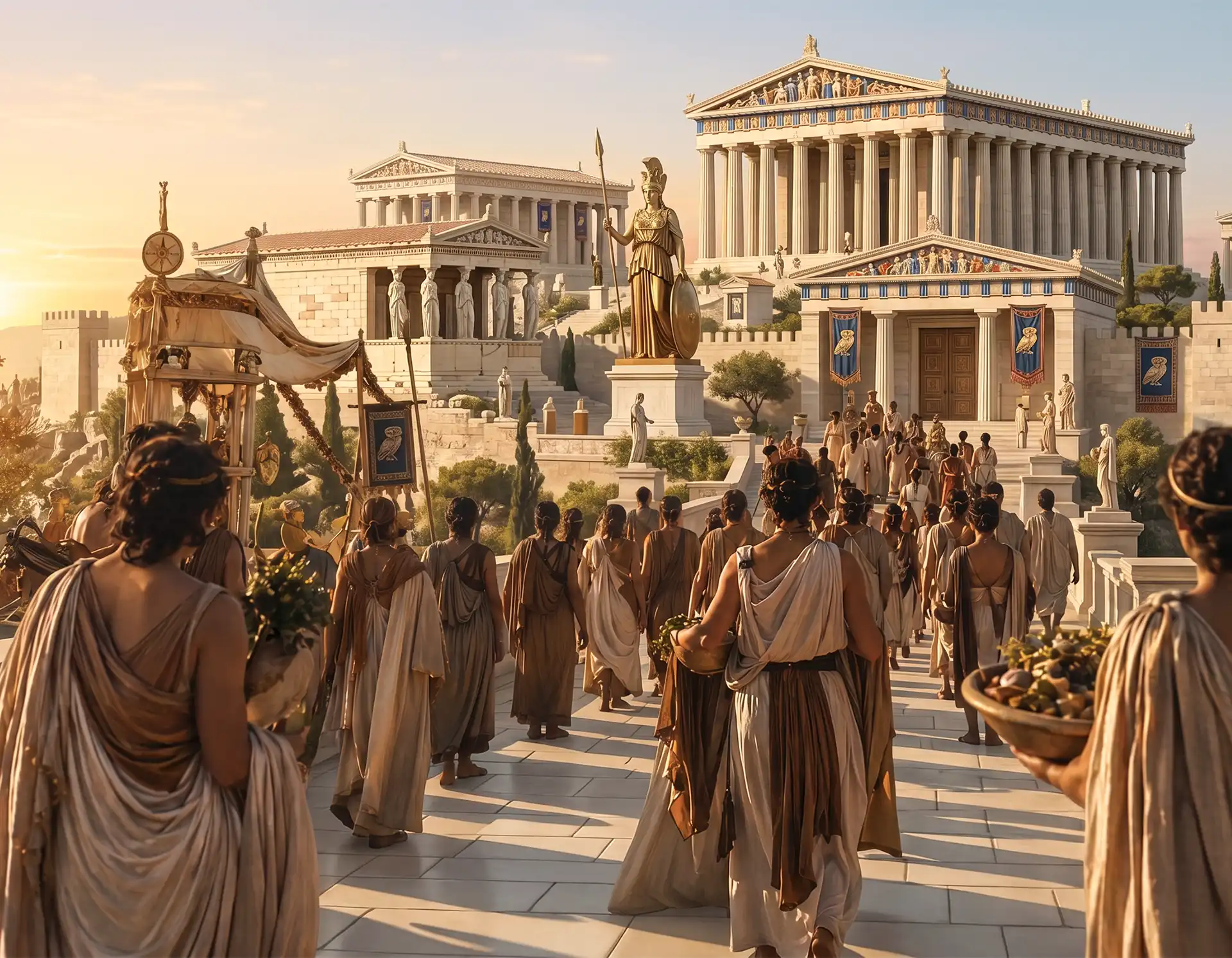
Panathenaic Festival Athens, procession towards the Acropolis

Today you climb the Acropolis and, aside from the chatter of other visitors, you're met with an almost solemn silence.

But for centuries, every July, the Panathenaic Festival in Athens turned that same path into the stage for the most important event on the Athenian calendar: a vast procession, music, athletic contests, and an entire city devoted to honouring its protector goddess.

It was held every year, but every four years it became something far grander: the Great Panathenaea, with more competitions, more visitors and more spectacle. And it all ended in the very same place our own tours end today: at the top of the Acropolis.

A festival to dress a goddess

The official purpose of the Panathenaic Festival was, quite literally, to bring Athena a new robe. A group of Athenian women spent months weaving a peplos — an embroidered gown — which was then presented to the ancient wooden statue of the goddess, kept inside the Temple of Athena Polias. The procession carrying that cloth from the Kerameikos district up to the Acropolis was the symbolic heart of the entire celebration.

Nearly every part of Athenian society took part: priestesses, prominent citizens, riders on horseback, and young people carrying offerings and sacrificial animals. In many ways, it was a parade representing the whole city marching before its own goddess.

The Panathenaic Festival, carved in stone forever

We know this procession in such detail thanks to a remarkable source: it was carved into the inner frieze of the Parthenon, the sculpted band that ran around the entire temple. According to the Acropolis Museum, the frieze shows exactly that procession: horsemen preparing in Kerameikos, young people carrying offerings, and the presentation of the peplos before the Olympian gods themselves, depicted at a larger scale than the mortals around them.

In other words, the most famous building of Greek antiquity has the festival that gave it meaning carved right into its walls. Seeing it in person, knowing this, completely changes how you look at that frieze.

More than religion: sport, music and civic pride

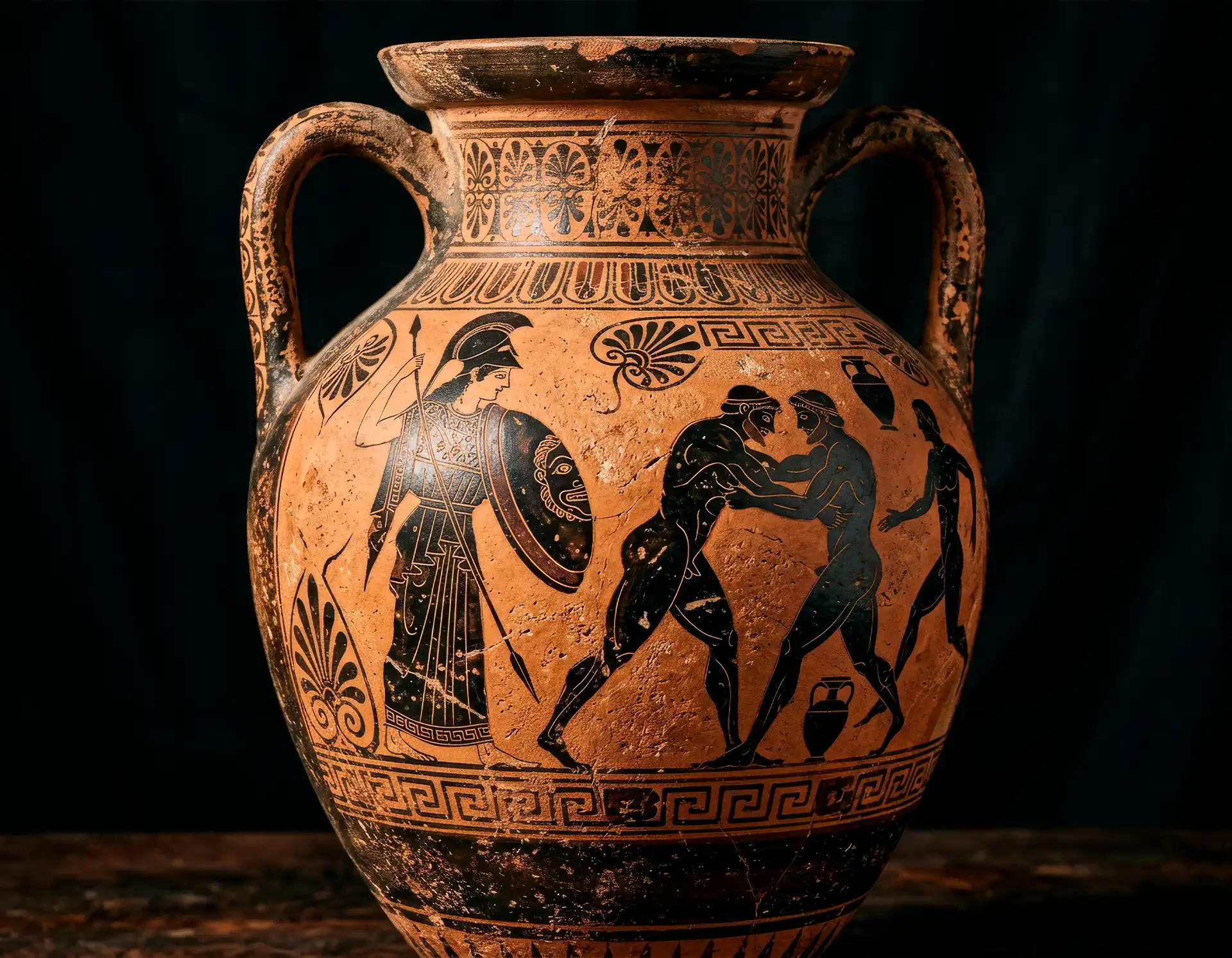
The Panathenaic Festival wasn’t only a religious procession. It included games with athletic contests (running, wrestling, the pentathlon), equestrian events and musical competitions, similar in spirit to the Olympic Games, though exclusive to Athens. Winners received Panathenaic amphorae: vases decorated with an image of Athena on one side and the winning event on the other, filled with olive oil from Attica, a prize of considerable value at the time.

Interestingly, that same competitive spirit is still alive today: the Panathenaic Stadium — the same white marble stadium you can visit in Athens now — was rebuilt on top of the ancient Panathenaic stadium and hosted the first modern Olympic Games in 1896.

What you need to know

How often was the Panathenaic Festival held?

A smaller version was held every year, and every four years the Great Panathenaea took place, with more events and wider participation.

Can you still see the Panathenaic frieze today?

Yes, a large part is preserved at the Acropolis Museum, while another portion is held, somewhat controversially, at the British Museum in London.

What's the connection to the Parthenon?

The Parthenon itself was built, in part, to house the great statue of Athena and to serve as a monumental backdrop for this festival. You can find further historical context on the official Visit Greece website.

Our recommendation

When you climb the Acropolis with us, we’ll point out exactly where each part of this festival took place: where the procession entered, where the peplos was kept, which fragments of the original frieze can still be seen. Understanding the Panathenaic Festival turns a beautiful visit into one you actually understand.

Discover this and other stories on our Acropolis and Parthenon Sunset Tour

When you climb the Acropolis with us, we'll show you exactly where the Panathenaic Festival Athens once came to life 2,500 years ago.

Book our Acropolis and Parthenon Sunset Tour and truly understand what you're looking at.