Ostrako the name that comes from a vote and a story of exile

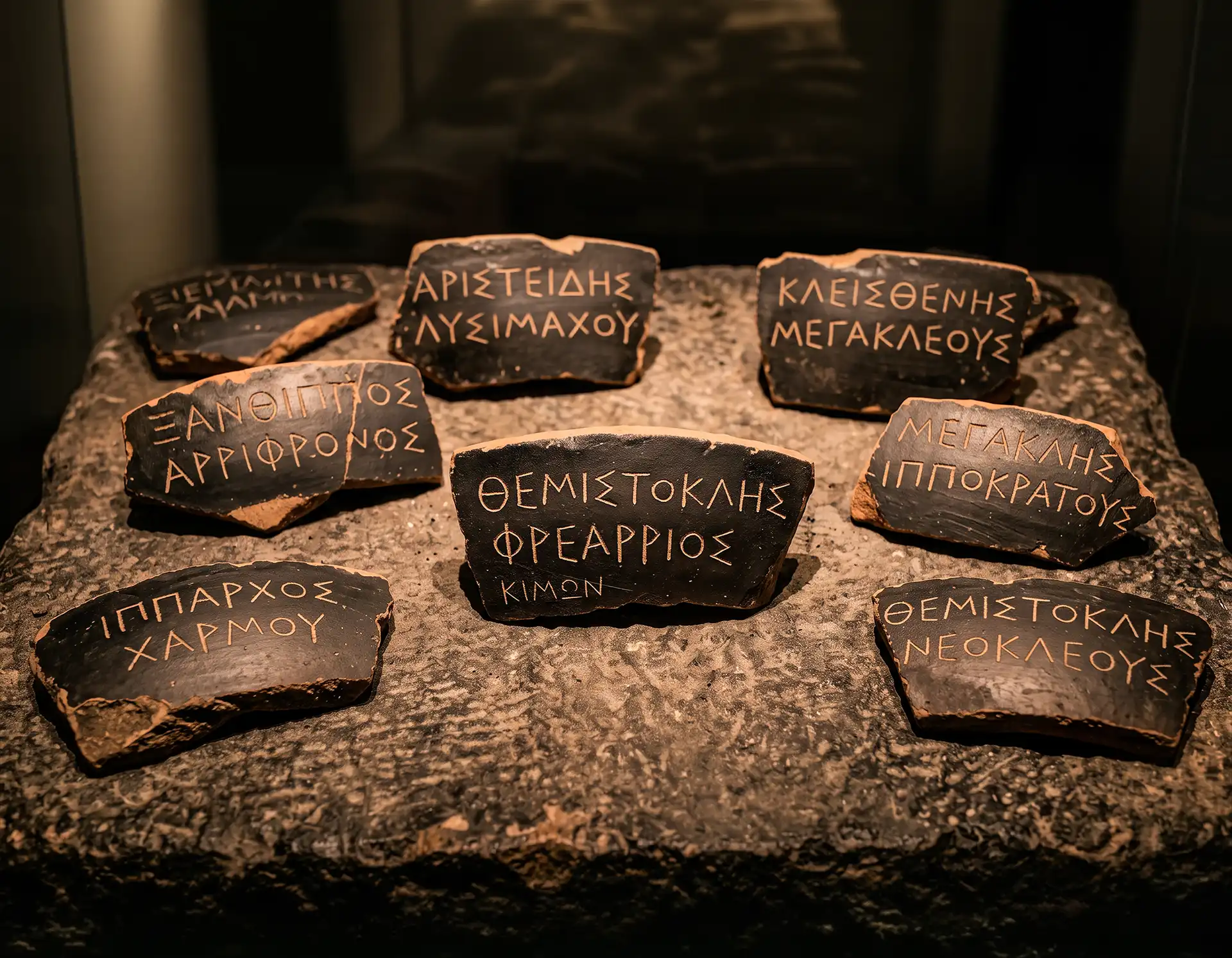
Ancient pottery ostraca, ostracism votes in ancient Athens

We've already told you why we chose this name, but there's a part of the story we left out:

How ostracism in ancient Athens actually worked, and what happened to the man who saved Greece yet was still exiled by his own city. It’s a story that says far more about our name than it might seem at first.

A piece of pottery with the power to change a life

Each year, the citizens’ assembly of Athens could decide whether to call a very particular vote. If the answer was yes, any Athenian with voting rights would scratch onto an ostrakon — a broken pottery fragment, the most readily available recycled material of the time — the name of the person they considered most dangerous to democracy. If someone passed a minimum threshold of votes against them, they had ten days to leave the city. Ten years of exile, with no trial, no defence, decided purely by popular vote.

No crime needed to have been committed. It was enough that enough citizens felt your power or influence had grown too great for the health of democracy.

A curious side note: the Greek word “ostrakon” is related to “ostreon”, meaning “oyster”. The connection isn’t a coincidence: both the rough shell of an oyster and a broken pottery fragment share that hard, coarse texture that ended up giving both things their name. In fact, the English word “oyster” comes from that very same Greek root.

The case of Themistocles that explains everything

If there’s one name that appears again and again on the ostraka fragments found in the Ancient Agora of Athens, it’s Themistocles. The very strategist who devised the naval manoeuvre that saved all of Greece from the Persian invasion at the Battle of Salamis, the undisputed hero of his generation, was exiled a few years later by that very same people he had saved.

He wasn’t the only one: Aristides, nicknamed “the Just” for his proverbial honesty, met the same fate. Cimon, another great general, too. Ostracism didn’t distinguish between heroes and villains: it distinguished between who had accumulated too much power and who hadn’t.

Thousands of votes, still there, written by hand

This isn’t just a story that reaches us through ancient texts: there’s physical evidence. According to the American School of Classical Studies at Athens, which has been excavating the Ancient Agora since 1931, more than 11,000 ostraka have been recovered, most of them from refuse dumps in the Agora itself and in Kerameikos. You can literally read the name of Themistocles, scratched by hand by an Athenian citizen almost 2,500 years ago.

There’s even a discovery that gives pause for thought: a batch of 190 ostraka bearing the name of Themistocles, all written by just fourteen different hands, found hidden in a well near the Acropolis. It seems even history’s most admired democracy wasn’t free from attempts to manipulate the vote.

Why this story still defines how we work

We didn’t choose this name to talk about exile. We chose it because this humble, broken piece of pottery gave every ordinary citizen the power to decide something important with their own voice, without needing to be a general, a philosopher or a noble. That’s the idea we love: that every person, however small their voice might seem, can decide things that genuinely matter.

When we design a trip, we apply the same logic: we don’t impose a fixed route built for the average traveller, we listen to what each traveller tells us and let that shape the decisions, just as each ostrakon carried weight in that vote.

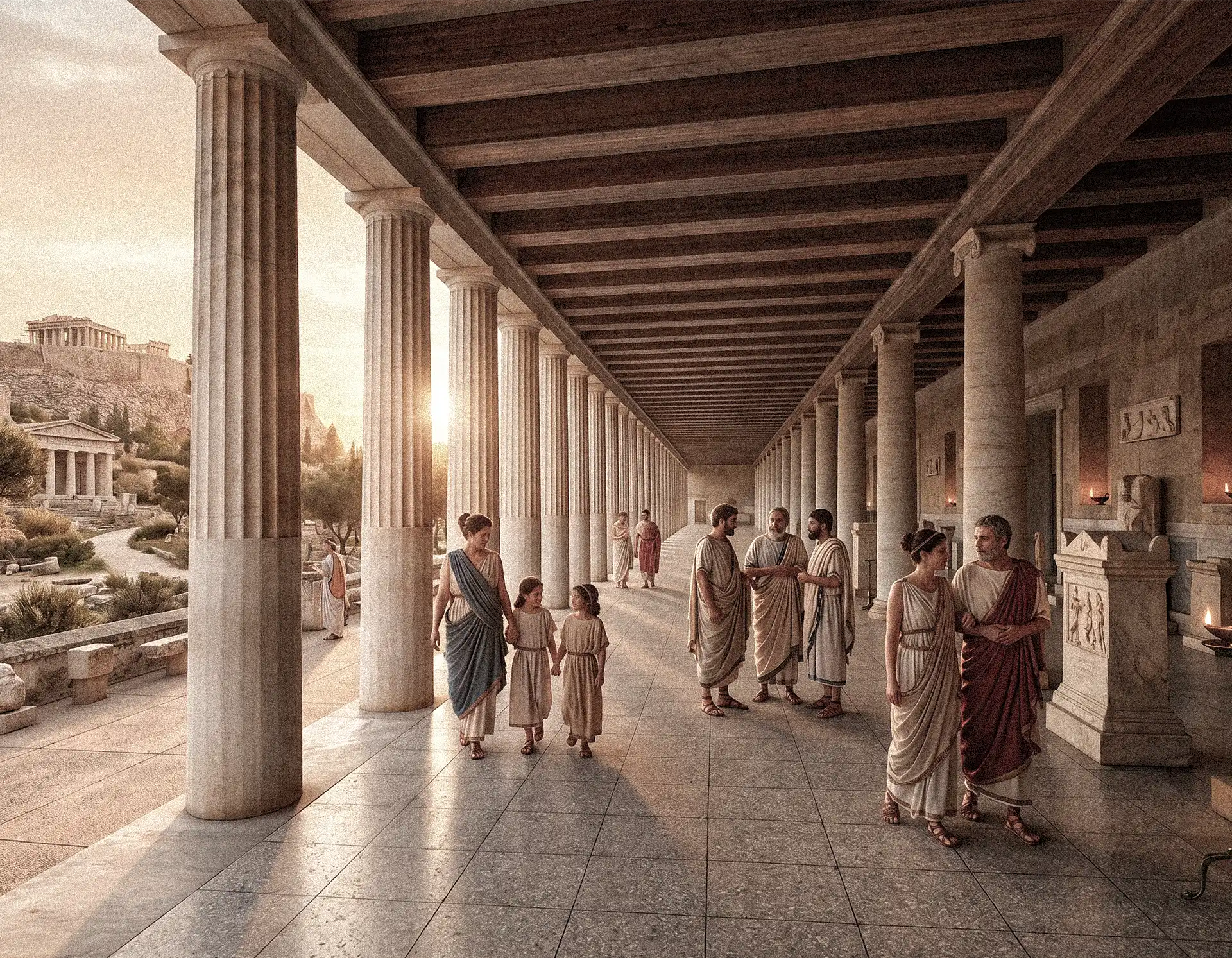
The Ancient Agora of Athens with the Stoa of Attalos in the background

Quick answers about ostracism

What exactly is an ostrakon

A broken pottery fragment used as a ballot in the ostracism process of ancient Athens.

Can real ostraka be seen today?

Yes, several examples are on display at the Ancient Agora Museum, in the Stoa of Attalos, as confirmed by the Greek Ministry of Culture.

Why did ostracism stop being practised?

It fell out of use in the late 5th century BC, after two political rivals joined forces to exile a third in a way many saw as gaming the system, which discredited the process.

Our recommendation

Next time you walk through the Ancient Agora of Athens, stop for a moment in front of the Stoa of Attalos and think about this: inside are pottery fragments bearing the name of the man who saved Greece, written by neighbours who decided he’d grown too powerful. It’s one of those stories that changes how you see a place forever.

If you’d like us to tell you stories like this in person, let’s start planning your trip.

Can you imagine seeing, with your own eyes, a piece of pottery bearing the name of the man who saved Greece, written by his own neighbours?

Let's start planning your trip and we'll show it to you in person.