Persephone and the Secret of the Four Seasons: The Myth Behind Greece's Changing Face

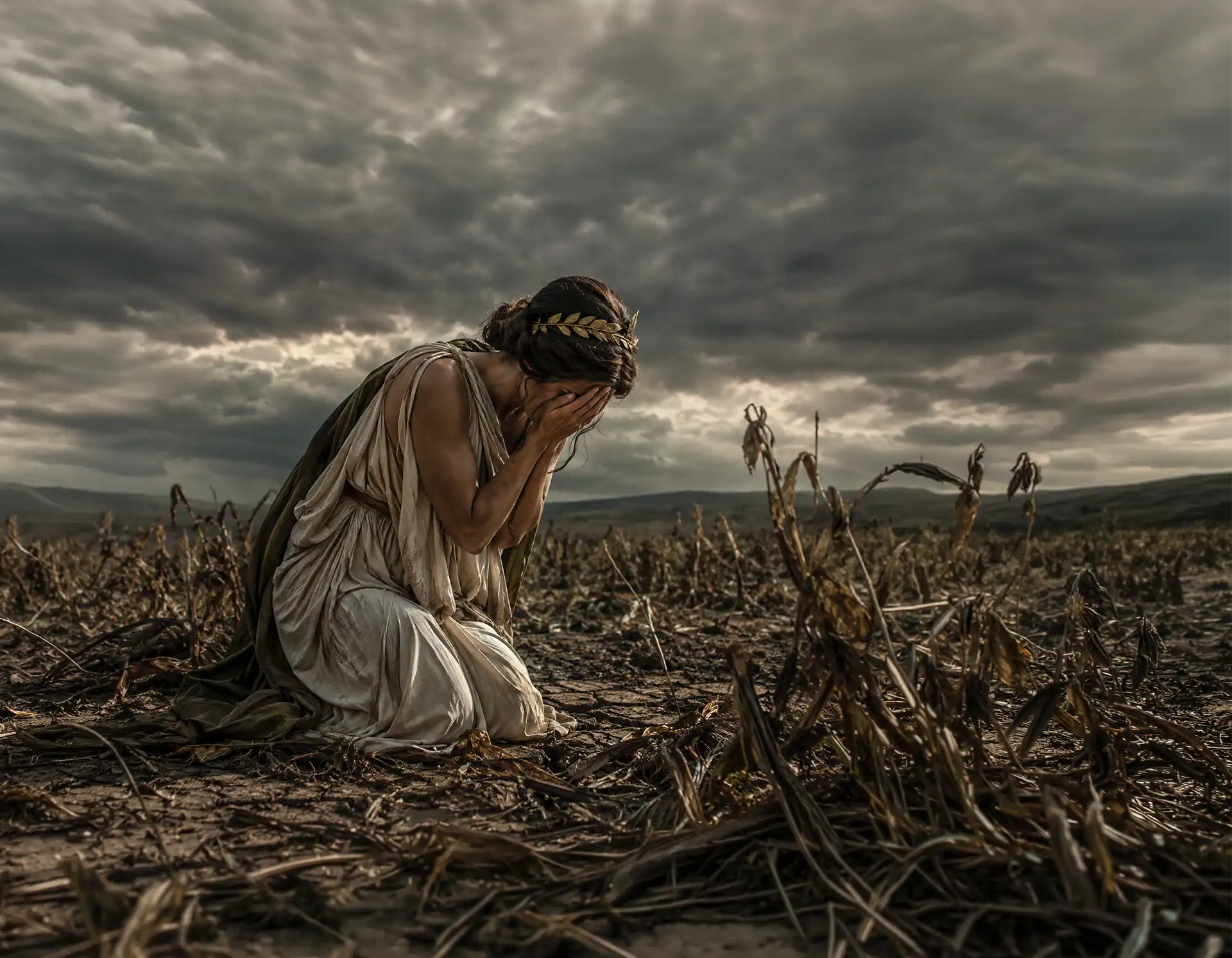
Demeter mourning inconsolably over Persephone's disappearance

The myth of Persephone is, quite possibly, the most beautiful explanation the ancient Greeks came up with for something we now settle with a simple calendar.

Why the Greek landscape changes so dramatically between July and January.

Behind the golden summer fields and the sleeping winter earth lies a story of love, abduction, and a mother who refused to give up.

The abduction that left the world without harvests

Persephone, daughter of Demeter (goddess of agriculture and the harvest), was picking flowers in a meadow when the earth split open beneath her feet. Hades, god of the underworld, had seen her and decided she would be his wife, with his brother Zeus’s blessing, without anyone bothering to ask her. He took her to live in the realm of the dead.

Demeter, unable to find her daughter anywhere, fell into such deep despair that she abandoned her duties as goddess of agriculture. The fields stopped bearing fruit, animals starved, and humans began to fear a famine that threatened to wipe out humanity altogether. Even the gods of Olympus couldn’t allow that: without humans, there was no one left to worship them.

The pomegranate seeds that decided her fate

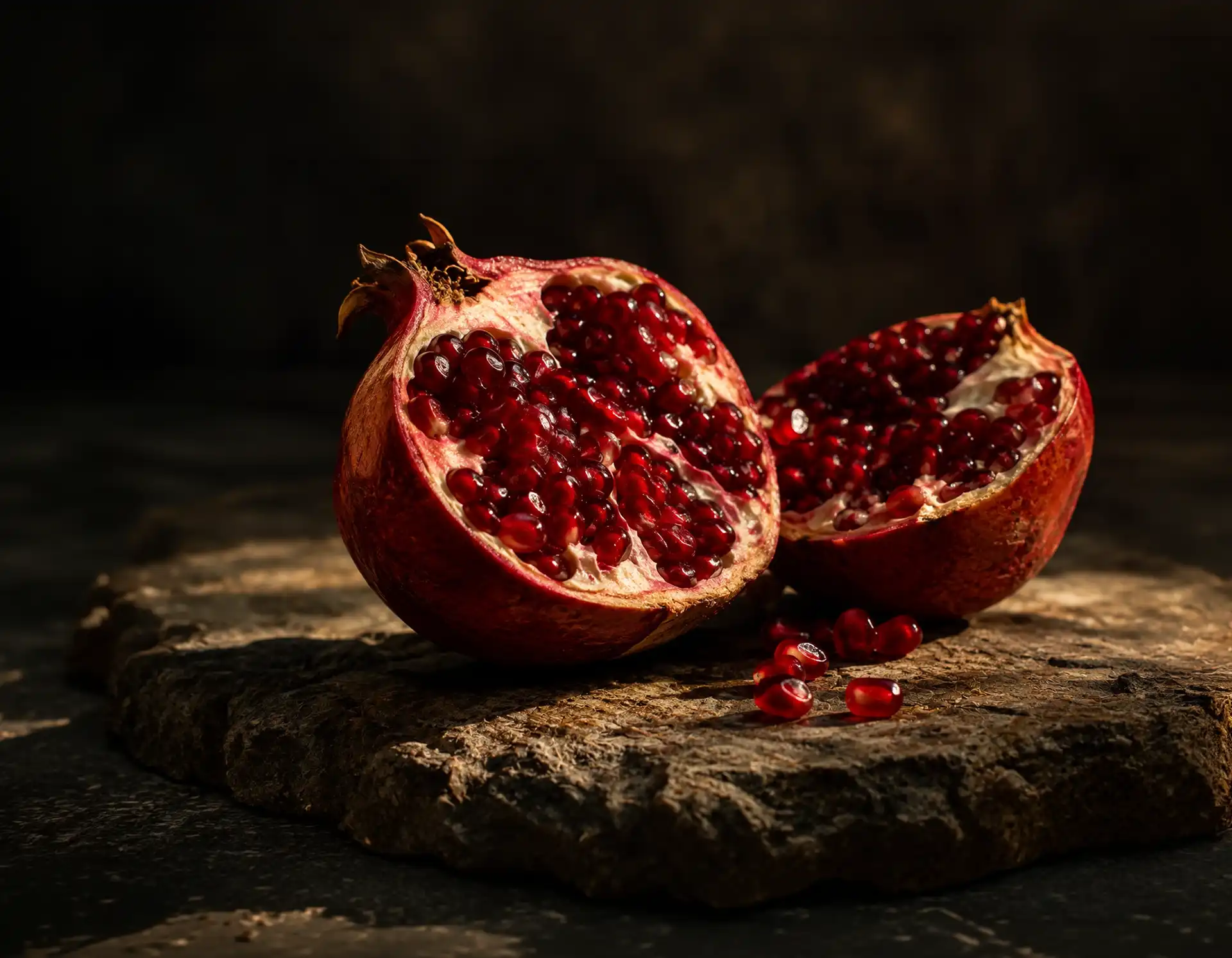
Zeus, pressured by the chaos spreading across the world, ordered Hades to return Persephone. And Hades obeyed… but not before offering Persephone some pomegranate seeds before she left. She ate six. And that seemingly innocent gesture came with a catch: whoever ate anything in the underworld remained bound to it forever.

The solution reached was a compromise: for every seed she had eaten, Persephone would spend one month a year in the underworld with Hades. Six seeds, six months below, six months above with her mother.

Open pomegranate with seeds, symbol of the myth of Persephone

The myth of Persephone explaining the four seasons

Here’s the key to it all: every time Persephone descends to the underworld, Demeter falls back into mourning, and the earth turns cold, grey and barren. That’s autumn and winter. And every time Persephone returns to the surface, Demeter bursts with joy, and the earth blooms again with her. That’s spring and summer.

It isn’t just a pretty tale. For the ancient Greeks, this myth literally explained why the agricultural cycle repeated year after year, and why Demeter herself, the goddess who fed all of Greece, depended emotionally on being reunited with her daughter.

The Eleusinian Mysteries, ancient Greece's best-kept secret

This myth didn’t stay just a nice story: it gave rise to one of the most important and mysterious cults in all of Greece, the Eleusinian Mysteries, celebrated for nearly 2,000 years at the sanctuary of Eleusis, around 20 km from Athens. According to Visit Greece, thousands of pilgrims walked the Sacred Way on foot from Athens to Eleusis to take part in a secret initiation linked to this very story, the exact content of which remains, centuries later, a well-kept mystery.

What you need to know

What does the myth of Persephone represent?

The cycle of the seasons and the relationship between life, death and agricultural renewal in the ancient Greek worldview.

Can you visit the site of the Eleusinian Mysteries?

Yes, the archaeological site of Eleusis (modern-day Elefsina) is open to visitors, according to official information from the Greek Ministry of Culture

Why was so much secrecy kept around the Mysteries?

Initiates swore absolute silence on pain of death; to this day, we still don’t know for certain exactly what took place during the ritual

Our recommendation

Next time you travel to Greece and notice how the landscape changes depending on the time of year — something we already covered in our guide on when to visit Greece — think of Persephone rising or descending at that very moment. Greek myths aren’t just stories from the past, they’re how this culture explained the world in front of them.

Discover more stories like this one on our Acropolis and Parthenon Sunset Tour:

Next time you see the Greek landscape change with the seasons, think of Persephone rising or descending to the underworld at that very moment.

Discover this and other myths on our Acropolis and Parthenon Sunset Tour.